
EPC and short-term lets: what you need to know
The “Energy Performance Certificate” (EPC) is a mandatory indicator that ranks homes according to their energy consumption and environmental impact.
More than just a technical document, it influences the value of the property and its rental prospects. However, seasonal lettings are covered by a special scheme which, under certain conditions, allows you to avoid the constraints imposed on properties let on a year-round basis.
Partial exemption for holiday lets
Primary or secondary residences rented on a short-term basis (for instance, seasonal rentals) are not subject to the EPC obligation, as long as the rental remains occasional and does not exceed 120 cumulative days per year.
This rule is based on article L324-1-1 of the French Tourism Code, which sets this threshold for main residences, but also accepts it as a reference for occasional use of secondary residences.
However, if the property is rented for more than 120 days a year, whether as a primary or secondary residence, it may be considered a regular or commercial rental activity.
In this case, local authorities may decide to reclassify the property as a regular furnished rental, which makes the EPC compulsory, in accordance with article L126-28 of the French Construction and Housing Code (Code de la construction et de l’habitation).
Working towards a ban on energy-inefficient housing
Homes with a EPC rating of G will no longer be able to be let starting from 2025, followed by F-rated homes in 2028 and E-rated homes in 2035. This deadline may seem a long way off, but it means that investments need to be made in advance to avoid a future rental ban. For a chalet in a ski resort, where rental demand is high in winter, failure to comply with these standards could result in a significant loss of income.
Why are chalets covered by the EPC?
Mountain chalets have particular characteristics that influence their energy performance. Built mainly of wood, they benefit from good natural insulation, but are often equipped with energy-guzzling heating systems. The extreme climate experienced in ski resorts increases energy consumption, particularly in a bid to maintain optimum comfort levels during the winter months. The EPC regulations, however, apply the same classification criteria to all types of properties, without taking into account the environment or climatic conditions.
According to a study carried out by My Sweet Immo, almost 50% of homes in ski resorts (including many ageing apartments) are rated F or G, which underlines the urgent need to adapt these homes to the new energy requirements.
How can I improve the energy performance of my chalet?
The main way to improve the EPC rating is through effective thermal renovation. Upgrading attic and wall insulation will limit heat loss and reduce energy consumption. Replacing windows with double or triple glazing is also an effective way of preventing heat loss.

From an energy point of view, it makes sense to opt for more efficient heating systems. Installing an air-to-water or air-to-air heat pump reduces electricity consumption while ensuring optimum comfort in winter. Pellet stoves and biomass boilers are also environmentally-friendly alternatives for chalets.
Finally, integrating renewable energies, such as thermal or photovoltaic solar panels, can be an interesting way of improving the EPC rating while reducing energy costs in the long term.
For more advice, read this article: “How to make your holiday rental property more sustainable”.
Energy renovation: a profitable investment
While the initial costs of energy renovation may seem high, it’s important to consider them as a long-term investment. For example, effective insulation can reduce a chalet’s energy consumption by 30-50%, saving several hundred euros a year on heating bills. Similarly, installing a heat pump can cut energy consumption by 65% compared with conventional electric heating, generating savings of over €1,000 a year depending on the size of the chalet.
According to Ademe (the French Environment and Energy Management Agency), the value of a well-renovated property can rise by 5-15% on the property market, making the investment profitable not only in terms of energy savings, but also in terms of resale value.
Find a certified professional and choose a company that specialises in energy renovation
Find a certified professional to carry out your EPC
Carrying out a reliable EPC that complies with legal requirements requires the services of a certified professional. You can find one via the website of the Ministry of Ecological Transition or the Ademe website. Specialist platforms such as AlloDiagnostic and Diagamter also offer diagnostic services tailored to mountain chalets.

How to find a company specialising in energy renovation
Finding a competent company to carry out the energy renovation of your chalet can be a challenge, but there are a number of criteria to help you make the right choice. It’s essential to give preference to RGE-certified professionals (“Reconnu Garant de l’Environnement”), as this certification guarantees that the work complies with ecological requirements and gives access to certain financial aid.
You can start your search via specialist platforms such as France Rénov’, which lists qualified companies in every region. It’s also a good idea to read customer reviews online and request several quotes to compare services and prices.
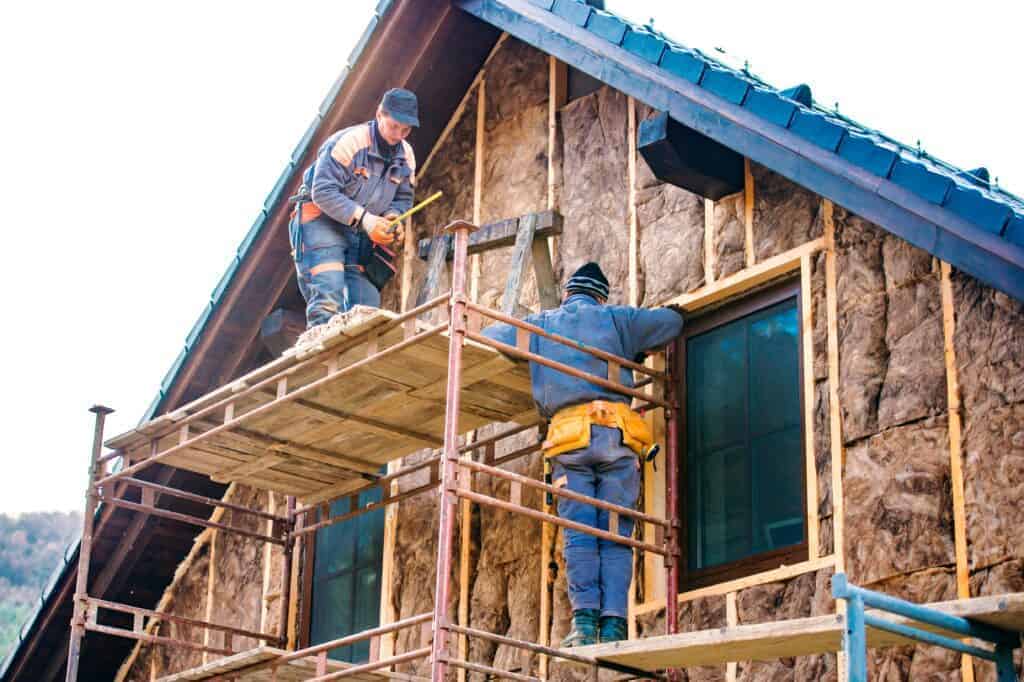
Using local companies has its advantages, as they usually have a better understanding of the specific climatic conditions of mountain chalets. Well-known companies in the field include:
- Klimat: specialising in energy-efficient renovations of high-altitude chalets, with solutions adapted to extreme conditions.
- Eco-Rénov’ Montagne: a network of qualified craftspeople specialising in insulation, heating and ventilation for mountain homes.
- Alpes Eco Solutions: experts in sustainable renovation at high altitude, with a focus on environmentally-friendly materials.
- Groupe ISERMATIC: a major player in energy-efficient home improvements in Savoie and Haute-Savoie.
- Local craftspeople: working with regional companies ensures a more personalised approach and a good knowledge of local regulations.
For more advice, read: “Everything you need to know about renovating your chalet in the Alps”.
Conclusion
If you own a chalet that you rent out for more than 120 days a year, we advise you to have an energy performance diagnosis (EPC) carried out. To do this, you can call on the services of a certified professional, who can be found on the Ministry of Ecological Transition or the ADEME website.
If your chalet has a G rating, you will need to carry out energy-efficiency renovations if you want to continue renting it legally – your diagnostician will be able to tell you what improvements to consider. If your chalet has a F rating, you will have until 2028 to undertake the necessary work.
Although these regulations may seem restrictive, they are also an opportunity to reduce your energy consumption and costs in the long run.
Do you want to optimise the the rental performance of your chalet?
Contact one of our experts for help.
With a portfolio of over 200 chalets under rental management, OVO Network can help you maximise your rental income and your occupancy rate.
Find out how much you can earn by renting out your chalet with our rental income calculator.